

When Giants Step Back, Opportunity Steps In
When Giants Step Back, Opportunity Steps In: What Causeway Bay's Commercial Reset Means for Global Brands and F&B Operators
By Hollies — April 2026 | Hollies Properties Insights
There is a particular kind of market signal that experienced property professionals learn to read differently from the crowd. When a prized Causeway Bay commercial site goes through a compulsory sale process and a heavyweight developer like New World Development reportedly steps aside, most observers see uncertainty. A few see something else entirely: a window—one that stays open briefly, rewards conviction, and closes quietly before most people realise it was there.
The news has circulated across Hong Kong's property press. A Causeway Bay commercial property failed its compulsory sale. New World, one of Hong Kong's most sophisticated and well-capitalised property conglomerates, chose not to proceed¹. And yet, almost simultaneously, JLL published research in the South China Morning Post confirming that high-end commercial properties in Causeway Bay are actively drawing major global tenants back to the district⁴.
These two narratives, read together, tell a more nuanced story than either does alone. And for brand owners, retail managers, restaurant entrepreneurs, and F&B operators with ambitions in Hong Kong, that story deserves a close, unhurried reading.
Understanding the Mechanics: What Is a Compulsory Sale in Hong Kong?
Before unpacking what this means strategically, it helps to understand what a compulsory sale actually is in the Hong Kong context. Under the Land (Compulsory Sale for Redevelopment) Ordinance, a party that owns a defined threshold of undivided shares in a lot—typically 80% or more for older buildings—can apply to the Lands Tribunal to compel remaining minority owners to sell, enabling redevelopment to proceed.
When a compulsory sale auction fails—meaning no buyer steps forward at or above the reserve price—the property does not disappear from the market. The process resets. Owners recalibrate. And the land sits in a state of relative limbo that creates room for negotiation and, for the right operators, access to spaces and terms that a fully recovered market would never offer. In premium locations like Causeway Bay, this limbo is historically brief².
The New World Factor: What Developer Restraint Really Means for Operators
New World Development's decision not to pursue the Causeway Bay site has drawn considerable attention, and understandably so. New World is not a passive observer of Hong Kong property. The group has built its reputation on strategic acquisitions in prime urban locations across Greater China, and its restraint at this juncture warrants careful analysis rather than reflexive alarm¹.
Developers operate on fundamentally different time horizons than operational tenants. Their investment calculus involves construction cost inflation, planning approval timelines, redevelopment yield projections, and the current state of Hong Kong's luxury residential and commercial sales pipeline. When a major developer steps back, it rarely means the location lacks value. Far more often, it means the development math—at that reserve price, in this interest rate environment, given pre-sale uncertainty—does not justify the capital commitment at this precise moment. That calculus looks entirely different for a restaurant group whose return comes from revenue generated inside four walls, not from asset disposal. The developer's hesitation and the operator's opportunity are not the same equation.
JLL's Contrarian View: Global Tenants Are Already Moving
While the compulsory sale narrative dominated headlines, JLL's research offers a strikingly different view of the same district. According to reporting in the South China Morning Post, high-end commercial properties in Causeway Bay are actively attracting major global tenants—with the professional services, financial, and premium lifestyle sectors looking at the area with renewed strategic seriousness⁴.
This is not sentiment or projection. JLL is one of the world's most respected commercial real estate advisory firms, and their transaction data reflects live mandates and executed leases. When they say major global tenants are being lured to Causeway Bay, it means occupancy decisions are being made right now—by companies with the due diligence capability to back their convictions with multi-year lease commitments. For F&B operators and brand managers, this is critical intelligence: global corporate tenants bring daytime footfall, disposable income, lunchtime trade, after-work dining demand, and the commercial energy that sustains restaurants and lifestyle retail across the full working week.
Why Causeway Bay Remains Asia's Most Consequential Commercial Address
Causeway Bay's position in Hong Kong's commercial hierarchy is neither accidental nor fragile. The district is served by one of the MTR's busiest stations, sits adjacent to Victoria Park, and commands a catchment that spans some of Hong Kong's most affluent residential pockets—Happy Valley, Jardine's Lookout, Tin Hau, and the eastern Mid-Levels. Browse our website to find a commercial property for lease in Hong Kong.
For years, Russell Street in Causeway Bay was ranked among the world's most expensive retail streets—a distinction earned through extraordinary pedestrian volumes and a concentration of high-spending local consumers and international visitors that few addresses anywhere could match. The post-pandemic recalibration of Hong Kong retail has adjusted certain rent levels, but it has not dismantled the demand drivers. The Times Square complex, the Lee Gardens portfolio, and the surrounding streetscape continue to draw a layered mix of residents, office workers, mainland visitors, and tourists. What has changed—in ways that are genuinely exciting for the right operators—is the composition of that demand and the types of experiences it seeks.
The F&B Revolution Already Underway in Causeway Bay
This is where the opportunity for restaurant owners and F&B entrepreneurs becomes particularly compelling. Over recent years, Causeway Bay has undergone a quiet but profound transformation in its hospitality and dining landscape. The departure of certain luxury mono-brand retailers from street-level and podium floors has freed up spaces that are being reimagined as dining destinations, cocktail lounges, specialty food concepts, and experiential hospitality venues—often at rental levels that reflect the transitional moment rather than a fully recovered market.
Hong Kong's dining culture is among the most sophisticated in the world. The city holds more Michelin stars per square kilometre than almost any other destination, and its consumers treat dining as both social ritual and a form of self-expression. Causeway Bay's density of office workers, residents, shoppers, and inbound visitors provides one of the richest possible audiences for ambitious F&B concepts. International groups consistently identify the district as a tier-one target. The reasons are straightforward: visibility, transit-driven footfall, proximity to affluent catchments, and the prestige that attaches, across Asia, to a Causeway Bay address.
The Cross-Border Consumer: A Demand Driver That Changes Everything
Any honest analysis of Causeway Bay's commercial opportunity must account for one of the most powerful structural demand drivers in the Asia-Pacific retail market: the continued recovery and evolution of cross-border consumer traffic from mainland China. Hong Kong remains, by cultural affinity, infrastructure, and brand ecology, the most accessible premium shopping and dining destination for mainland Chinese consumers—and Causeway Bay sits squarely at the heart of that proposition.
For F&B operators with concepts that speak to discerning Chinese consumers—whether through culinary narrative, premium positioning, social media resonance, or experiential design—Causeway Bay represents direct access to one of the world's most commercially consequential consumer cohorts. Brands that establish their Hong Kong flagship in Causeway Bay are not simply opening a restaurant. They are staking a visible claim in the city's most legible commercial address for that audience.
Reading the Valuation Reset Honestly
It would be intellectually dishonest to ignore the headwinds Hong Kong's commercial property market has faced. Since 2019, a combination of social disruption, pandemic dislocation, and macroeconomic recalibration have compressed valuations across parts of the commercial spectrum. Retail rents in locations most aggressively priced during the 2015–2018 cycle have corrected meaningfully.
But corrections in premium markets are historically where the most durable long-term positions are established. The failed compulsory sale is, in part, a function of a valuation gap—the point at which seller expectations and buyer willingness to pay have not yet converged. These gaps close. In genuinely strategic locations, they close faster than in secondary markets, precisely because the underlying demand drivers remain structurally intact²³. For lease-seeking occupiers—as distinct from freehold buyers—rental corrections translate directly into improved cost structures, longer rent-free periods, better fit-out contributions, and the possibility of locking in long-term positions at rates that would have been unimaginable five years ago. The question is not whether Causeway Bay will recover. It is whether you are in position before it does.
What Smart Brands Are Doing Right Now
The brands and F&B operators that tend to succeed in Causeway Bay—and in Hong Kong's commercial landscape more broadly—are not waiting for certainty. They are using this period of recalibration to do what high-conviction operators have always done in transitional markets: move deliberately, negotiate from a position of informed confidence, and build long-term equity in a location before the crowd returns and terms harden.
Several consistent behaviours characterise the most successful entrants during periods like this. They engage early with specialist advisors who understand the nuances of each building, each ownership structure, and each micro-location within the district—because in Causeway Bay, the difference between a great site and a mediocre one can be measured in meters and floors. They conduct rigorous consumer research specific to their target customer within the district's catchment. They approach lease negotiation not as a transactional exercise but as a long-term positioning decision, seeking terms that provide operational resilience across the full business cycle. And critically, they do not wait for recovery to be confirmed in the headline data—because by the time it is, the window has already closed.
The Hollies Properties View: This Is a Moment, Not a Trend
At Hollies Properties, we have been active in Hong Kong's commercial and retail property market long enough to recognise when a confluence of signals like this emerges. A failed compulsory sale in one of the world's great commercial districts. A major developer exercising disciplined restraint. Global institutional tenants moving decisively despite—or because of—that caution. Rental levels that, in certain pockets of Causeway Bay, represent the most favourable positioning opportunity in a cycle.
These signals do not persist indefinitely. The very forces currently creating space in the market—cautious capital, recalibrated expectations, developer hesitation—are the same conditions that, when they reverse, tend to reverse with speed. Hong Kong has demonstrated this pattern repeatedly: the pace of recovery in truly prime locations has consistently surprised even experienced participants. Causeway Bay is not in distress. It is between chapters, and the next chapter is already being written by the operators and brands now taking their positions.
Practical Guidance: Where to Focus Your Energy
For those actively evaluating a Causeway Bay entry—or an expansion within the district—several practical considerations are worth front-loading before you engage the market.
Understand the building typology before you target a site. The difference between street-level retail, podium F&B, and upper-floor commercial space in Causeway Bay involves not just rent differentials but fundamentally different footfall profiles, operational logics, and brand visibility dynamics. Some of the district's most celebrated F&B concepts operate above ground level, where economics are more favourable and design freedom considerably greater.
Know the ownership landscape. Causeway Bay's commercial stock is held across a spectrum of structures—listed REITs, institutional portfolios, family-held buildings, and mixed-title complexes. Who owns the building you are targeting, and what their strategic priorities are at this precise point in the cycle, shapes your negotiating position in ways that no amount of market data alone can replicate. This is where local intelligence and embedded relationships become the decisive differentiator.
Align your concept with where the district is going, not just where it has been. The Causeway Bay emerging from this transitional period is more experiential, more F&B-oriented, and more lifestyle-driven than the version that preceded it. Concepts that offer genuine experiential depth—distinctive hospitality, a coherent narrative, a reason for consumers to return—will find receptive audiences and, increasingly, receptive landlords who understand the footfall value a compelling F&B anchor brings to their asset.
Conclusion: The Window Is Open — For Now
There is a moment in every market cycle when the balance of available opportunity, negotiating leverage, and informed conviction tilts briefly in favour of those who are paying close attention. In Causeway Bay right now, that moment is visible to anyone willing to read beyond the headlines.
A failed compulsory sale is not a eulogy for one of Asia's most enduring commercial districts. It is a chapter in its evolution—one that, read alongside JLL's data on returning global tenants, the district's structural pedestrian fundamentals, the cross-border consumer recovery, and the F&B and lifestyle transformation already underway, tells the story of a location recalibrating, not retreating. The fundamentals are intact. The momentum is building. The terms of entry still reflect today's caution rather than tomorrow's confidence.
For the brands, restaurant groups, and F&B entrepreneurs who understand what it means to hold a Causeway Bay address—and who are prepared to act with the decisiveness this kind of market moment demands—the conversation with Hollies Properties starts here.
Reach out to our team at www.hollies-properties.com to explore current commercial and F&B opportunities in Causeway Bay and across Hong Kong's most sought-after districts.
Main Sources
¹ Ming Tiandi — "Hong Kong's New World Balks at Chance to Buy Prized Causeway Bay Site" — mingtiandi.com
² The Standard — "A Causeway Bay Commercial Property Compulsory Sale Fails" — thestandard.com.hk
³ AAStocks Financial News — Causeway Bay Compulsory Sale Coverage — aastocks.com
⁴ South China Morning Post — "High-End Office Properties in Causeway Bay Lure Major Global Tenants, JLL Says" — scmp.com
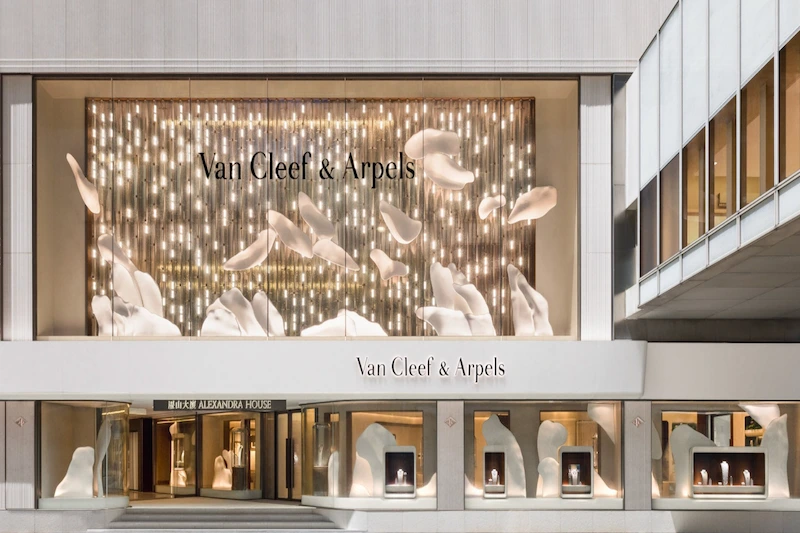
Photo by Nicole Ho on Unsplash
Written by FV for Hollies Properties Insights — April 2026
© Hollies Properties. All rights reserved. | www.hollies-properties.com/insights

.webp)


