

The Rise of Chinese Luxury Brands
🇨🇳 The Rise of Chinese Luxury Brands: Cultural Confidence, Strategic Growth, and a New Global Narrative
For decades, luxury in China meant Paris, Milan, Geneva. European maisons defined craftsmanship, prestige, and aspiration. Chinese consumers bought into heritage that was not their own.
That era is shifting.
China is no longer just the world’s largest luxury consumer market. It is becoming a luxury brand creator. A new generation of Chinese luxury houses—particularly in jewelry, fashion, and lifestyle—are redefining what premium means through cultural narrative, modern design, and strategic retail expansion.
This is not imitation. It is repositioning.
And it signals one of the most important structural evolutions in global luxury over the past twenty years.
From Consumption to Creation
For nearly two decades, China powered global luxury growth. Domestic demand sustained European brands through financial crises and pandemic disruptions. Chinese consumers represented the growth engine of the industry.
But scale eventually creates capability.
As domestic wealth expanded and creative industries matured, a natural transition began: from buying global luxury to building local luxury.
This transition rests on three pillars:
- Cultural confidence
- Domestic capital strength
- Digital-native brand building
Chinese luxury is not trying to replicate Western heritage. It is constructing its own.
Jewelry: The Vanguard of Chinese Luxury
Jewelry is the clearest lens through which to understand this shift.
Historically, established players like Chow Tai Fook, Lao Feng Xiang, and Chow Sang Sang dominated through retail scale and gold expertise. They built vast distribution networks across Mainland China and Hong Kong, capturing generational trust in gold and bridal jewelry.
Today, a new wave is emerging—brands that combine traditional symbolism with contemporary design language.
These brands incorporate:
- Jade reinterpreted through minimalist modern settings
- Zodiac motifs redesigned with architectural precision
- References to imperial dynasties and palace aesthetics
- Calligraphy-inspired forms
- Song Dynasty minimalism
The result is not traditional gold retail. It is narrative-driven luxury rooted in Chinese identity.
Luxury is no longer foreign validation. It is cultural affirmation.
Guochao and the Reclaiming of Cultural Codes
The broader movement often described as Guochao—the “national trend”—has accelerated this transformation.
Chinese consumers, particularly younger affluent buyers, increasingly value brands that reflect local heritage in a modern voice. This is not about nationalism; it is about relevance.
Western luxury once symbolized global sophistication. Today, Chinese consumers are equally drawn to brands that speak directly to their history, mythology, and aesthetic traditions.
In jewelry and fashion, this translates into:
- Mythological storytelling integrated into collections
- Limited editions tied to Chinese festivals
- Design language referencing traditional architecture
- Emphasis on craftsmanship rooted in local techniques
These brands are premium not because they imitate Europe, but because they reinterpret China.
Retail as Cultural Stage
Luxury depends on space as much as product.
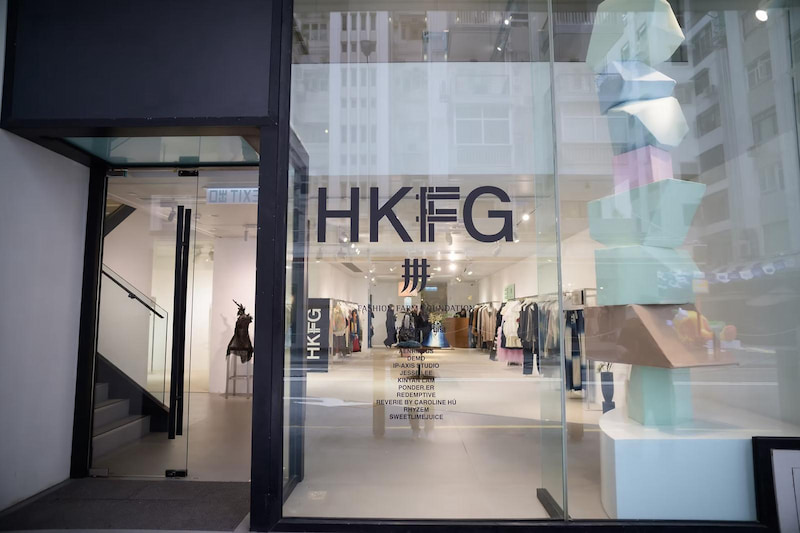
Chinese luxury brands are investing heavily in experiential retail environments that blend contemporary design with historical references. Boutiques incorporate lacquer tones, jade textures, ink-inspired palettes, and minimalist architectural lines inspired by classical gardens.
Retail becomes theater. It is immersive, photogenic, and culturally layered.
The strategy mirrors global luxury playbooks but with localized narrative depth. Instead of showcasing European heritage timelines, these brands showcase Chinese civilization as their foundation.
Physical presence reinforces legitimacy.
Digital Acceleration and Direct Consumer Access
Unlike legacy Western maisons built over centuries, Chinese luxury brands are digital-native.
They leverage:
- Social commerce ecosystems
- Influencer amplification
- Livestream retail
- Data-driven personalization
China’s advanced digital infrastructure provides immediate feedback loops between consumer behavior and product development. This reduces risk, accelerates iteration, and strengthens brand responsiveness.
The combination of physical theater and digital agility gives Chinese luxury brands a structural advantage in speed.
Capital, Scale, and Domestic Growth
China’s domestic market provides unparalleled luxury testing ground. Rising middle-class wealth and a growing high-net-worth segment create sustained demand for premium goods.
Domestic tourism and policy shifts encouraging local luxury consumption have further strengthened the internal market.
This scale allows brands to refine pricing architecture, supply chain management, and customer experience before considering international expansion.
Just as Chinese technology brands used domestic scale as a springboard for global growth, luxury brands are consolidating authority at home first.
Premium Positioning Without Western Reference
Perhaps the most significant psychological shift is this:
Chinese luxury brands no longer define themselves in comparison to European houses.
They define themselves in relation to Chinese culture.
This repositioning removes the “alternative” label. It places them in a primary position within their own cultural context.
A jade high-jewelry piece referencing Tang Dynasty design is not an imitation of Cartier. It is a reinterpretation of Chinese history in contemporary form.
This confidence is new—and powerful.
Early Signals of Global Potential
While most Chinese luxury brands remain domestically focused, early signs suggest outward ambition.
Designer fashion labels are appearing at international fashion weeks. Jewelry brands are attracting overseas Chinese communities and culturally curious global consumers. Cross-border e-commerce is lowering barriers to international awareness.
The global luxury market has historically been dominated by European heritage groups. But structural shifts—digital distribution, changing consumer identity, and geopolitical realignment—create space for new narratives.
Chinese luxury brands are positioning themselves to fill that space.
The Strategic Transformation
China’s luxury industry reflects a broader national shift: from production power to brand authority.
The transformation is built on:
- Cultural narrative ownership
- Premiumization rooted in identity
- Experiential retail investment
- Digital-native agility
- Domestic market scale
It is still early. But the direction is unmistakable.
China is no longer only the engine of luxury consumption.
It is becoming a generator of luxury brands.
The Bottom Line
The global luxury industry is entering a new chapter.
Chinese consumers once sought Western heritage to express success. Increasingly, they seek brands that reflect their own cultural depth and modern confidence.
Jewelry brands reinterpreting jade and imperial symbolism. Fashion labels embracing Song-era minimalism. Lifestyle houses blending contemporary design with ancient motifs.
This is not a trend. It is structural evolution.
China’s luxury industry is moving from imitation to innovation, from adoption to authorship.
And as cultural confidence grows, the question is no longer whether Chinese luxury brands will rise.
It is how far they will go.
AUTHOR: HOLLIES
.jpeg)
.webp)


