

Hong Kong’s Student Housing Market Enters a New Phase: Policy Support, Private Capital and the Rise of Urban Hostels
Hong Kong’s student accommodation market is moving from a niche real estate category into a more active urban asset class. A combination of rising non-local student numbers, limited university dormitory supply, underused commercial and hotel stock, and new government facilitation measures is creating momentum for purpose-built and converted student housing across the city.
The shift accelerated after the Hong Kong SAR Government launched the Hostels in the City Scheme in July 2025, encouraging the private sector to convert suitable commercial buildings into student hostels. Since then, market interest has broadened, with developers, hotel owners, education institutions and investors reassessing how older commercial assets can support Hong Kong’s ambition to become an international post-secondary education hub.
Recent moves — including HKR International’s launch of HOLLYWOOD RESIDENCE in Sheung Wan and the Government’s expression-of-interest exercise for three new student hostel sites — suggest that student accommodation is becoming one of Hong Kong’s most closely watched real estate themes in 2026.
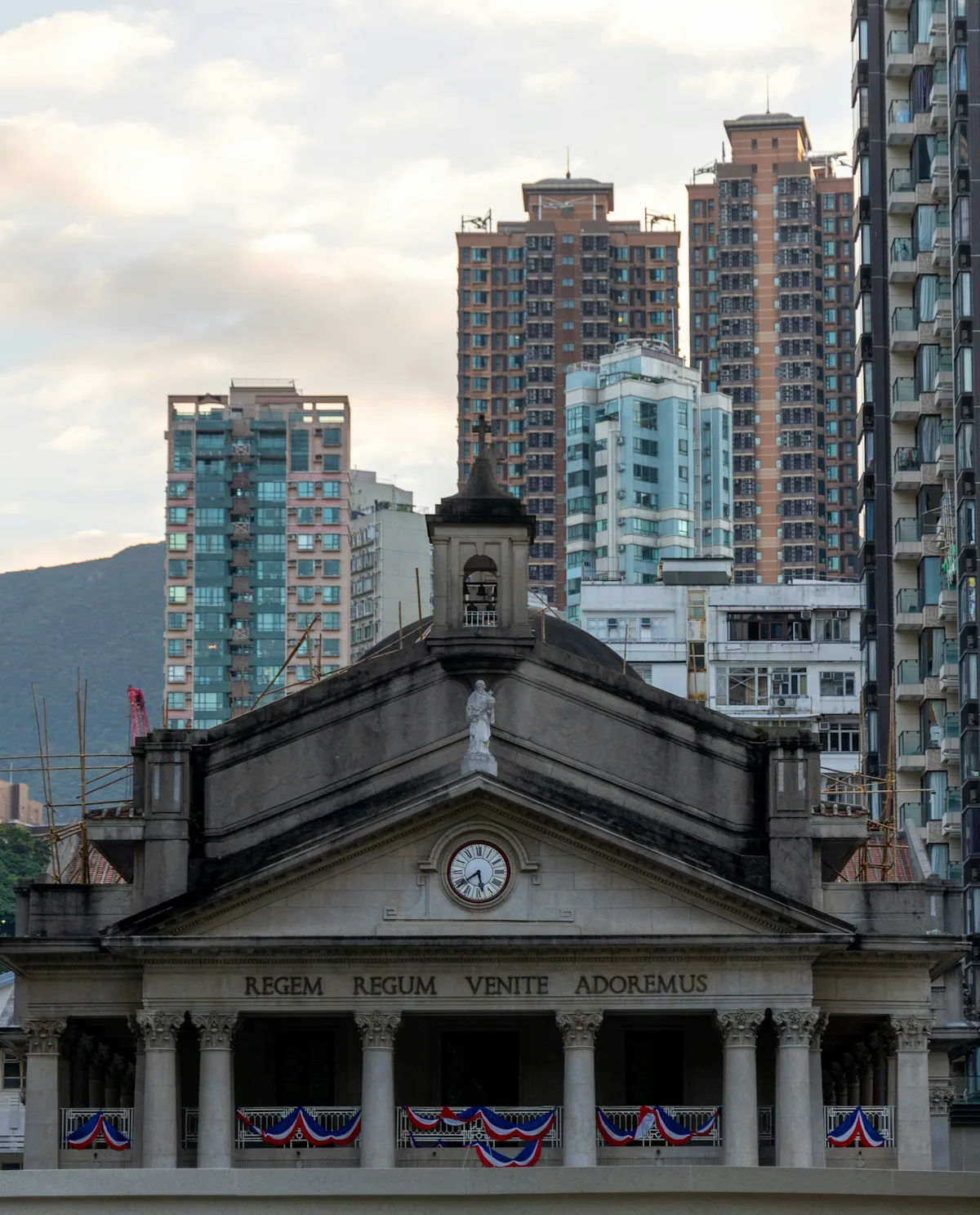
Student Housing Demand Is Rising Quickly
Hong Kong’s student housing shortage is being driven by structural demand rather than short-term market noise. According to CBRE, the number of full-time non-local students in Hong Kong reached 79,000 in the 2024/25 academic year, nearly doubling from four years earlier. This has placed pressure on existing university dormitories, leaving many students to compete in the private rental market.
CBRE estimates that continued enrolment growth has created demand for nearly 50,000 student accommodation beds, while many students are still relying on private apartments that may be expensive, less suitable for student living, or located far from campus.
This imbalance has implications beyond the education sector. As Cushman & Wakefield notes, increasing student hostel supply could help absorb rental demand from non-local students in the private residential market, easing longer-term pressure on private rents while also reinforcing Hong Kong’s position as an international post-secondary education hub.
Hostels in the City: A Policy Breakthrough
The Hostels in the City Scheme was launched on 21 July 2025 by the Development Bureau and Education Bureau to streamline development control procedures and encourage market-led student accommodation supply. The scheme was originally focused on converting commercial buildings into student hostels, before being expanded following encouraging market response to also cover newly built student hostels.
Under the Education Bureau’s framework, applications are open year-round. Interested developers and operators must submit applications to the EDB using the prescribed form, together with a statutory declaration. If all necessary information is provided, the EDB expects to inform applicants of the result within around two to four weeks.
The scheme is supported by the Development Projects Facilitation Office under the Development Bureau, which provides facilitation on enquiries, development measures and application progress.
Key eligibility rules include:
- Hostel tenants must be full-time local or non-local post-secondary students enrolled in locally accredited sub-degree or degree programmes operated by specified institutions.
- Applications must comply with scheme guidelines and relevant development approvals.
- Industrial zonings and industrial buildings are not eligible under the scheme.
- Converted or newly built hostels must remain dedicated to student accommodation use.
This marks an important shift in Hong Kong’s planning and property landscape: student housing is now being treated as a policy-supported urban infrastructure need, not simply a by-product of university campus planning.
Why Commercial Buildings and Hotels Are in Focus
The scheme is especially relevant to owners of older commercial buildings, lower-tier hotels and underutilised urban assets.
CBRE highlights several policy features that make conversion more attractive:
- Planning flexibility
The Town Planning Board expanded the definition of “Hotel” use to cover student hostels supported by government policy. In commercial zones where hotel use is always permitted, conversion into student hostels may not require planning permission. In some other zones, a Section 16 planning application may still be required. - Gross floor area flexibility
Building owners may retain and repurpose certain “excess” gross floor area from the original building. This can support communal facilities such as study rooms, gyms, lounges and central kitchens. - Reduced land premium friction
Many commercial and hotel properties may not trigger additional land premiums or lease modifications if their leases already permit broad non-industrial or commercial uses. - Streamlined approval process
The Development Projects Facilitation Office acts as a coordinating body to help reduce administrative uncertainty. - Usage safeguards
The scheme restricts eligible residents to full-time post-secondary students and prevents individual hostel rooms from being sold as speculative real estate products.
For investors, this framework offers a new path for assets that may be struggling in the traditional office or hotel market. For policymakers, it provides a way to increase student bedspaces without relying solely on university-built dormitories.
Market Response: From Conversions to New Brands
The market has already started responding.
CBRE notes that even before the formal rollout of the scheme, Hong Kong Metropolitan University invested nearly HK$1 billion in early 2025 to acquire Urbanwood, set to be renamed MU88, for conversion into student residence use. Centaline Property also purchased a hotel in Tsim Sha Tsui and launched a student housing brand called Campus One Communities, signalling growing private-sector interest.
Cushman & Wakefield reported that, after the Hostels in the City Scheme was launched, the Government received 24 applications involving around 5,000 beds. Of these, 22 applications had been confirmed to comply with eligibility criteria, while the remaining two were under processing. Most applications were for conversion of existing buildings, with the majority involving wholesale conversion.
This early response suggests that the scheme is not merely theoretical. It is already influencing asset strategies, particularly for hotels and commercial buildings in well-connected districts.
HOLLYWOOD RESIDENCE: A Private-Sector Example in Sheung Wan
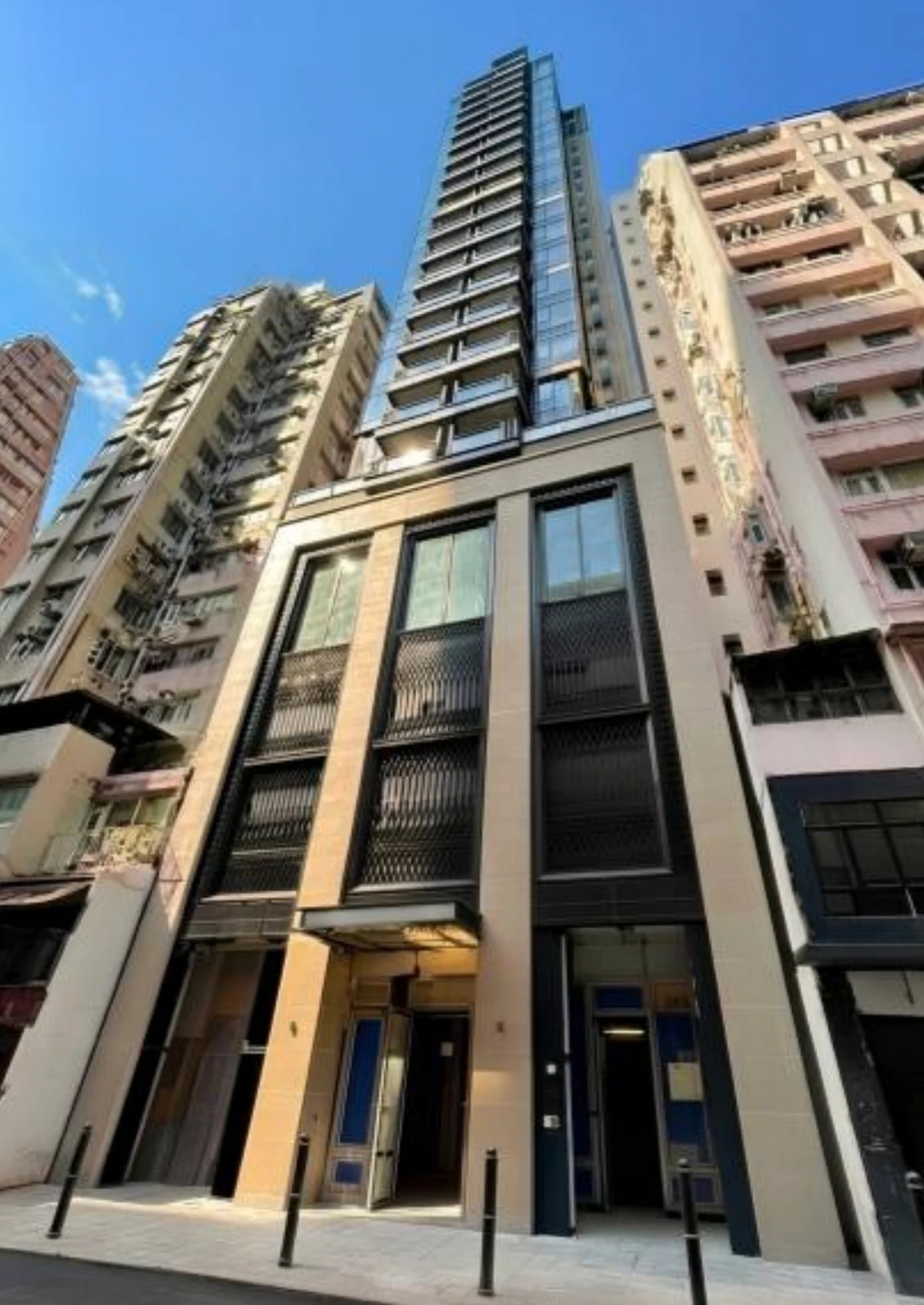
One of the clearest examples of private-sector momentum is HOLLYWOOD RESIDENCE, HKR International’s first student accommodation project.
Launched on 4 August 2026, the project is located at 165 Hollywood Road in Sheung Wan and offers approximately 160 premium bedspaces. Completed in June 2026, it is scheduled to commence operations in August 2026, welcoming its first cohort of student residents for the 2026/27 academic year.
The location is a key selling point. The residence is positioned near major Hong Kong Island tertiary institutions and is described as two MTR stops from HKU Station, with nearby bus routes providing direct access to The University of Hong Kong campus and other urban districts.
HOLLYWOOD RESIDENCE offers single, twin and triple rooms, with monthly rentals starting from HK$9,000. Units include bathrooms with wet and dry zones, fitted kitchen units, smart security systems, high-speed Wi-Fi, climate control and storage. Selected units also feature balconies, while shared study spaces and communal areas are designed to support both academic and social life.
For HKRI, the project marks a strategic expansion into student accommodation. For the broader market, it reflects how private developers are beginning to position student housing as a premium, service-oriented residential product rather than simply a basic dormitory substitute.
Government Land Supply: Three Sites Could Add 4,500 Beds
Conversion is only one part of the story. In January 2026, the Development Bureau invited expressions of interest for student hostel development on three formed commercial sites in:
- Kai Tak
- Siu Lek Yuen, Shatin
- Tung Chung East
The Government’s preliminary estimate is that the three sites could provide around 4,500 beds in total, depending on final project design.
The Kai Tak site, located in the former South Apron area near Kai Tak Sports Park and the New Acute Hospital, has a site area of around 0.74 hectares and a maximum gross floor area of around 43,000 square metres.
The Siu Lek Yuen site is near City One and Shek Mun MTR stations, with a site area of around 0.11 hectares and maximum gross floor area of around 10,000 square metres.
The Tung Chung East site is close to the future Tung Chung East Station, expected to commence operation in 2029, and has a site area of around 0.25 hectares with maximum gross floor area of around 23,000 square metres.
The Government indicated that, subject to market response, one or more of these sites could be made available for land sale by open tender in 2026/27 at the earliest. Lease conditions are expected to restrict use to student hostels only, prohibit alienation of individual rooms, and impose a proposed building covenant period of 48 months.
This is significant because it introduces student accommodation into Hong Kong’s land disposal pipeline, moving the sector beyond ad hoc conversions into purpose-planned development.
Hotels May Have the Fastest Conversion Path
Although commercial buildings are central to the policy narrative, CBRE expects a higher volume of applications from existing hotel buildings than from traditional commercial properties.
The reasoning is practical. Lower-tier hotels often require relatively minor adjustments to become student accommodation, such as adding communal kitchens, study areas or bunk-bed furniture. By contrast, office conversions may involve more substantial capital expenditure, including room subdivision, mechanical and electrical upgrades, and fire safety compliance.
CBRE also notes that around 3.4% of hotel stock had already been converted into co-living or student accommodation before the scheme announcement. The policy therefore gives additional support to a trend that had already begun.
Location will remain critical. Assets near universities, MTR stations and established student neighbourhoods — including areas such as Hung Hom, Jordan, Sai Ying Pun, Sheung Wan and other well-connected urban districts — are likely to attract the greatest interest.
Challenges: Design, Operations and Exit Strategy
Despite strong momentum, the student housing opportunity comes with execution risks.
Converted buildings must meet appropriate standards for space, ventilation, fire safety, accessibility and operational management. Office conversions may face particular challenges around natural lighting and ventilation, especially where layouts were not originally designed for residential-style occupation.
Operational oversight will also be essential. Student housing is not just real estate; it is a managed living environment. Operators will need clear rules around security, maintenance, rent transparency, resident support and grievance handling.
For investors, exit strategy is another consideration. CBRE notes that if a hostel building under the scheme is to be sold, the current owner must provide at least six months’ notice to the Government and existing tenants, and any buyer must declare a commitment to continue operating the property as a hostel. The scheme also includes a non-alienation clause restricting strata-title sales of hostel rooms while the property remains in hostel use.
These safeguards are important for policy integrity, but they also affect investment underwriting and liquidity.
A New Urban Asset Class for Hong Kong
Hong Kong’s student housing sector is entering a more institutional phase. Policy support is improving approval certainty, private capital is testing new operating models, and developers are beginning to treat student accommodation as a strategic asset class.
The opportunity is not only about providing beds. Done well, student hostels can help revitalise older commercial stock, support the education economy, ease pressure on the private rental market, and strengthen Hong Kong’s appeal to international students.
The next phase will depend on execution: whether conversions can meet quality standards, whether operators can deliver affordable and well-managed accommodation, and whether the Government can maintain policy flexibility while protecting student welfare.
If these pieces come together, student housing could become one of Hong Kong’s most important real estate growth stories of the late 2020s.
By F.V. | August 2026
Sources
CBRE – Hong Kong Hostels in the City Scheme for Student Housing Urban Revit
Education Bureau – Hostels in the City Scheme
HKR International – HKR International Debuts First Student Accommodation “HOLLYWOOD RESIDENCE”
.jpeg)
.webp)


