

Luckin Coffee's Hong Kong Blitz: From Five Stores on Day One to a City-Wide Expansion
When Luckin Coffee arrived in Hong Kong on 30 December 2024, it did not tiptoe in. The mainland China coffee giant opened five stores simultaneously across Hong Kong Island, Kowloon and New Territories — a declaration of intent that left little doubt about the ambition behind the move. Less than two years later, Luckin has passed 20 locations in the city, crossed the 35,000-store threshold globally, and is still accelerating. Its Q2 2026 results, announced on 3 August, showed revenues of nearly RMB16 billion and a global store count exceeding 36,000. The Hong Kong expansion is one chapter in a much larger story, but it is a particularly telling one.
More Than a Coffee Chain: A Signal of Mainland Brand Ambition
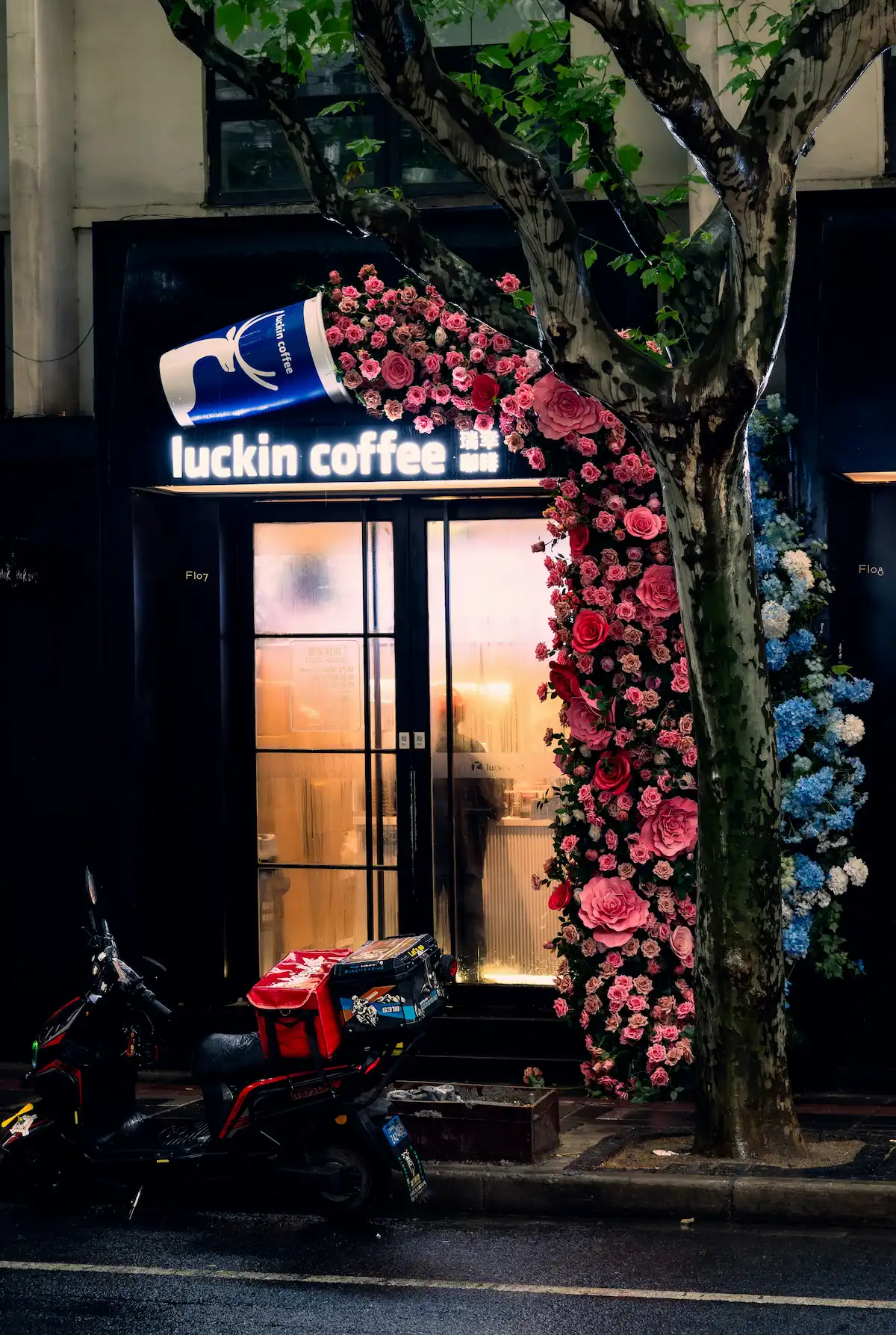
Before getting into the store-by-store rollout, it is worth stepping back to understand what Luckin's arrival in Hong Kong represents beyond a single brand entering a new market.
The South China Morning Post reported at the time of the December 2024 launch that mainland Chinese brands are ramping up their presence in Hong Kong, using the city as a testing ground before foraying overseas. Luckin — which bills itself as the "Starbucks of China" for having the most outlets on the mainland — was framed by analysts as a sign of things to come for Hong Kong's retail segment. The dynamic is a reversal of the older model, in which global Western brands used Hong Kong as their Asian beachhead. Today, the direction of travel is increasingly the opposite, with Chinese brands using the city to refine their international playbook.
Luckin fits that pattern precisely. Hong Kong is densely urban, internationally connected, culturally mixed and commercially sophisticated. It is exactly the kind of market where a brand built in China needs to prove it can operate before moving further afield. That strategic framing shapes everything about how Luckin has approached the city — from its pricing decisions to its store design choices to the speed of its rollout.
The Launch: Five Stores, One Day, December 2024
Luckin's Hong Kong debut was announced with the kind of confident simultaneity that has become a hallmark of the brand's expansion playbook.
On 30 December 2024, five stores opened at once across the city. The locations were: Des Voeux Road Central in Sheung Wan, Mira Place in Tsim Sha Tsui, Metro City Plaza in Tseung Kwan O, Mong Kok New Town Mall, and Sha Tin Centre. Together they covered the city's major retail and commercial corridors from the first day — Hong Kong Island, Kowloon and the New Territories all represented in a single opening event.
InvestHK, which announced the news, framed the five-store launch as a show of confidence in the city's food and beverage sector. Arnold Lau, Associate Director-General of Investment Promotion at InvestHK, said Hong Kong's strategic location and international business environment made it "an ideal place for Luckin Coffee to expand globally."
Dr. Guo Jinyi, Chairman and CEO of Luckin Coffee, was direct about the commercial logic: "Hong Kong as an international city has a rich coffee culture. Customers here have a huge demand for high-quality coffee that offers great value for money." He added that Luckin would "open more stores in Hong Kong, continuing to provide high-quality coffee to meet the local people's needs."
The Mira Place outlet in Tsim Sha Tsui attracted particular attention — it opened right next to an existing Starbucks. The proximity was not accidental. Luckin has built its entire brand identity in direct reference to Starbucks, positioning itself as the challenger with better value and a more tech-driven experience.
The Pricing Question: Value in a High-Cost Market
Luckin's success in mainland China rests heavily on aggressive pricing. In China, an Americano can start from around 23 yuan and a Latte from 29 yuan. Some promotional pricing brings drinks as low as 9.90 yuan, roughly HK$10.77.
Hong Kong is a different market. The Standard reported that Luckin's Hong Kong menu prices an Americano and Latte at HK$39, and its signature Coconut Milk Latte at HK$42 — broadly matching Starbucks pricing and sitting 26 to 59 percent above what mainland customers pay for the equivalent drinks.
The brand has partly bridged this gap through introductory offers: a HK$15.90 first-order deal via its mobile app was promoted at launch, creating an accessible entry point for customers who might otherwise compare prices with Starbucks before deciding.
This pricing calibration matters because Luckin's value proposition in China is inseparable from its cost position. In Hong Kong, the brand appears to be competing less on price and more on the experience, convenience and cultural novelty of the brand itself — including its IP and pop culture collaborations, which have proven effective at reaching younger consumers.
Rapid Scale-Up: Twelve Stores in Six Months
From five stores on launch day, Luckin moved quickly. By late May 2025 — just five months after entering the market — the chain had 12 locations across Hong Kong.
Its twelfth outlet opened at Park Central in Tseung Kwan O on 24 May 2025. Around the same time, the brand announced a SpongeBob-themed concept store at its Siu Sai Wan location — a campaign that would become one of its most strategically revealing moves in the city.
Winning Gen Z: The SpongeBob Collaboration
The SpongeBob activation at Siu Sai Wan, running from 31 May to 29 June 2025, was more than a seasonal promotion. Marketing Interactive reported that the collaboration was chosen specifically for SpongeBob's cross-generational appeal and cultural resonance with Hongkongers, with Luckin aiming to create an immersive in-store experience that would resonate particularly with the Gen Z segment.
The brand launched a co-branded drink alongside the activation — the kale light detox fruit tea (羽衣輕體蔬果茶) — and offered customers who purchased two beverages in a single transaction an exclusive SpongeBob-themed sticker. The mechanic was designed to drive higher per-visit spend while giving customers a collectible incentive to return.
In conversation with Marketing Interactive at the time, a Luckin spokesperson also confirmed the brand's broader strategic ambitions in the city, stating that Luckin planned to "strategically expand its store network across Hong Kong, with a focus on central business districts such as Central." Whether in shopping malls, office buildings or street-side locations, the brand aimed to "develop distinctive store formats tailored to diverse consumer preferences."
The SpongeBob collaboration reflects a wider playbook. Luckin has built a reputation in China for high-frequency, culturally attuned IP partnerships — with anime, K-pop, gaming and entertainment brands — that give the stores an energy and topicality that goes well beyond the coffee itself. Deploying that same approach in Hong Kong signals that the brand intends to compete on experience and cultural currency, not just on price or convenience.
Hitting 20 Stores: The Airport and the Avenue of Stars
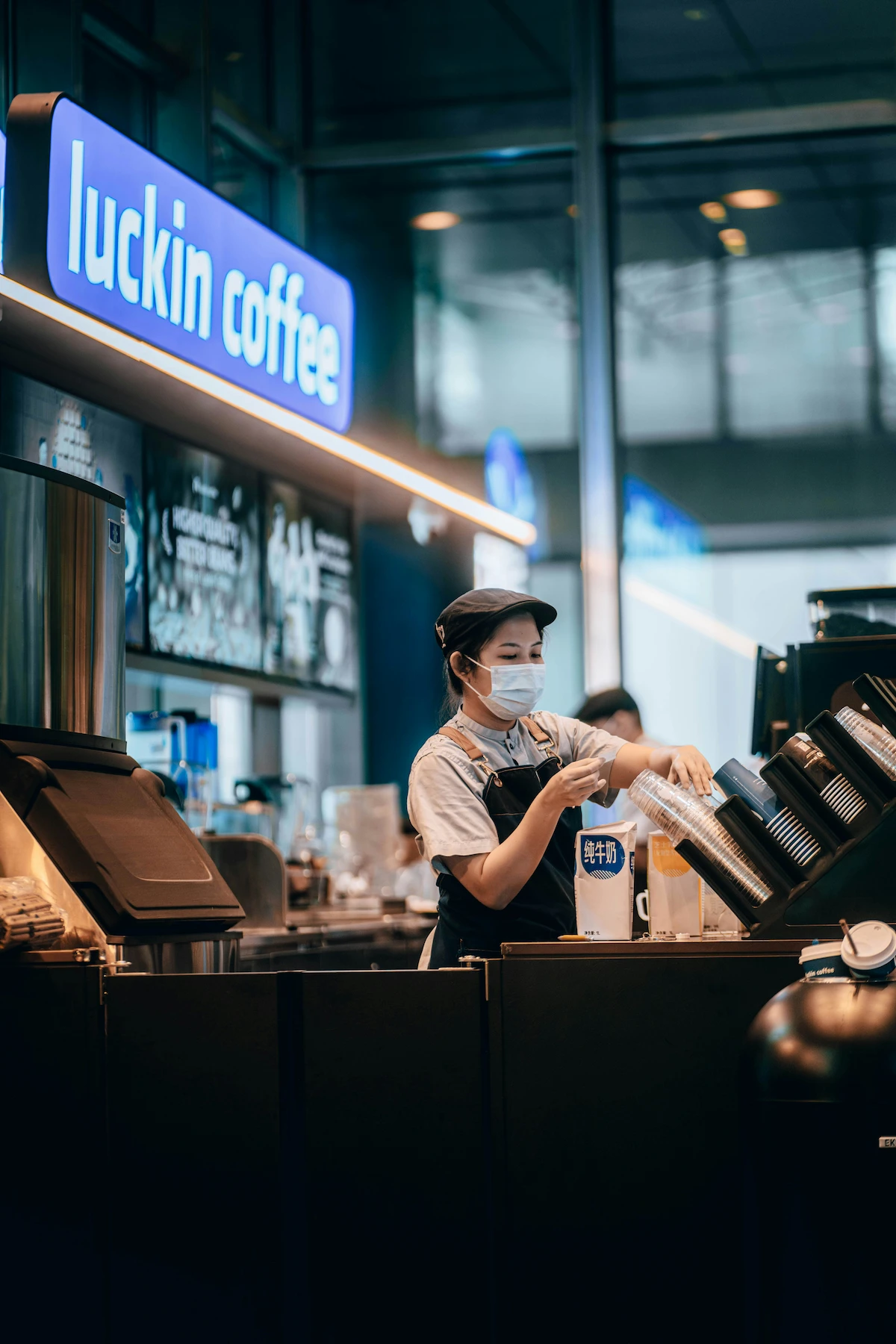
The expansion into iconic Hong Kong destinations came next.
QSR Media Asia reported that Luckin opened a new outlet at Terminal 2 of Hong Kong International Airport, bringing its city total to more than 20 stores. The airport branch covers over 1,000 sq ft and is designed with a retro Hong Kong theme combined with Broadway-style décor — a thoughtful nod to the city's visual heritage that echoes the kind of place-specific design Luckin has used to differentiate concept stores on the mainland.
To mark the milestone, Luckin ran a promotion called "Lucky Journey: 20 Stores" at all Hong Kong locations from 26 to 29 September 2025.
Beyond the airport, the brand also confirmed the opening of a speciality store at the Avenue of Stars in Tsim Sha Tsui — one of Hong Kong's most visited tourism landmarks. Marketing Interactive reported that Luckin described Hong Kong explicitly as "a key testing ground and international hub" for its globalisation strategy, with the city showing "robust business growth" that provides "strong support for Luckin Coffee's vision of becoming a world-class coffee brand." Customers at the Avenue of Stars store were also offered a limited-edition gift for purchasing two drinks and sharing a post on Facebook, Instagram or Xiaohongshu — a social media mechanic that directly targets both local consumers and the tourist visitors passing through one of the harbour's most photographed destinations.
The Global Engine: Record Q2 2026 Results and 36,000+ Stores
Luckin's Hong Kong push sits inside one of the fastest retail network expansions in modern F&B history, and the brand's Q2 2026 financial results — announced on 3 August 2026 — put the scale of that engine in sharp relief.
Total net revenues for the second quarter of 2026 reached RMB15,885.6 million (approximately US$2.34 billion), representing 28.5% year-over-year growth. GAAP operating income increased 22.0% year-over-year to RMB2.1 billion. Net profit came in at RMB1.5 billion, up 16% year-on-year. The company generated RMB2.6 billion in net operating cash flow in the quarter, maintaining a strong net cash position of RMB9 billion as of 30 June 2026.
Average monthly transacting customers reached a record high of 112.7 million, with cumulative transacting customers approaching 500 million. The global store count stood at 36,310, comprising 36,087 stores in China and 223 international stores, up 39% year-over-year. More than 5,000 net new stores were opened in the first half of 2026 alone, maintaining what the company described as an industry-leading expansion pace.
Dr. Guo Jinyi commented: "Our second quarter performance reflects the strength of our high-quality, scaled growth strategy and the resilience of our business model. We continue to translate growing consumer demand into market share gains, with our store network surpassing 36,000 locations and cumulative transacting customers approaching 500 million."
The company also completed a US$195.1 million share repurchase program covering 48,900,000 shares, and its OTC-listed stock (LKNCY) rose 15.6% following the results announcement.
The non-coffee business has also become a meaningful part of the story. As of May 2026, cumulative sales of Luckin's non-coffee beverages had surpassed RMB20 billion, with 22 individual products each exceeding 100 million cups sold. The brand entered Hong Kong with just over 21,000 stores globally in Q3 2024. By February 2026, it had reached its 30,000th store, marked by the launch of a new "Origin Flagship" format in Shenzhen spanning around 420 sqm. The jump from 30,000 to 36,000 in roughly six months is a number that speaks for itself.
What Luckin Brings to Hong Kong's Coffee Market
Hong Kong already has a deeply embedded café culture. Starbucks holds the dominant position in Western-style coffee retail, local cha chaan teng culture remains strong, and specialty independents have grown steadily over the past decade. Luckin is entering as a distinct third proposition — not trying to replicate the cha chaan teng experience and not trying to out-premium the independents, but instead offering consistent branded coffee at broadly accessible price points, supported by a mobile-first ordering model and a regular stream of limited-edition collaborations.
The SpongeBob tie-in at Siu Sai Wan, the Broadway-themed airport store and the Avenue of Stars location all point to a Hong Kong strategy that layers experience and local identity onto the convenience-forward model Luckin refined in China. Rather than a one-size-fits-all rollout, the brand is matching store format and design language to specific locations and audiences.
The SCMP's read on the broader context is worth keeping in mind here too. Luckin is not operating in isolation — it is part of a wave of mainland Chinese brands using Hong Kong as an international proving ground. The city's unique position, sitting at the intersection of Chinese consumer culture and global business, makes it ideal for brands that need to demonstrate they can operate beyond the mainland before committing to more distant markets. How Luckin performs in Hong Kong will inform what comes next.
By F.V. August 2026
.webp)
.webp)
%2520PIC%2520(1).webp)


