

McDonald’s Hong Kong Property Sell-Down Shows Investors Still Want Prime Retail Assets
McDonald’s is quietly becoming one of the most closely watched sellers in Hong Kong’s retail property market.
Over the past year, the fast-food chain has been disposing of self-owned restaurant premises across the city, turning long-held shops into cash at a time when Hong Kong’s retail property sector remains under pressure. The sell-down has now reached nearly half of its reported portfolio, with 11 of 23 self-owned Hong Kong restaurants sold for around HK$980 million.
The transactions are significant not only because of McDonald’s brand name, but because they show that well-located retail assets can still attract buyers even in a cautious market. While shop values remain far below their pre-pandemic peaks and transaction volumes are thin, McDonald’s properties have continued to change hands — often at prices that deliver substantial gains over decades-old acquisition costs.
A Phased Disposal Plan
McDonald’s Hong Kong property sell-down began with a structured disposal plan.
In July 2025, JLL was appointed as sole agent for the sale of eight prime retail properties with a total market value of around HK$1.2 billion, or approximately US$153 million. The properties were offered by public tender, either individually or as a portfolio, with the tender originally set to close on 16 September 2025.
At the time, reports indicated that McDonald’s could eventually offload all 23 self-owned Hong Kong shops, with an estimated total market value of around HK$3 billion. The first batch of eight shops represented the opening phase of that larger strategy.
The logic was clear: McDonald’s had accumulated a valuable real estate portfolio during its expansion across Hong Kong, but the company’s current asset strategy appears focused on unlocking capital from owned properties while continuing restaurant operations through long-term leases.
Why These Assets Attract Buyers
A key feature of the portfolio is that the properties are secured with long-term McDonald’s leases. For investors, that matters.
Unlike vacant retail units, which may face uncertainty around tenant demand and achievable rents, McDonald’s-backed shops offer a recognisable operating tenant, established locations and predictable income characteristics. In a weak retail market, that kind of stability can stand out.
Inputs Daily noted that Hong Kong’s retail property market remains in one of its weakest periods in decades, with shop values still more than 50% below pre-pandemic peaks. Shop transaction volume also remains low: only 379 shop transactions were completed in the first half of 2026, little changed from the same period a year earlier, according to Centaline Commercial figures cited in the report.
Against that backdrop, McDonald’s sell-down suggests investors are highly selective — but still willing to buy prime, income-producing retail assets.
Early Sales: Yuen Long, Mong Kok and Kennedy Town
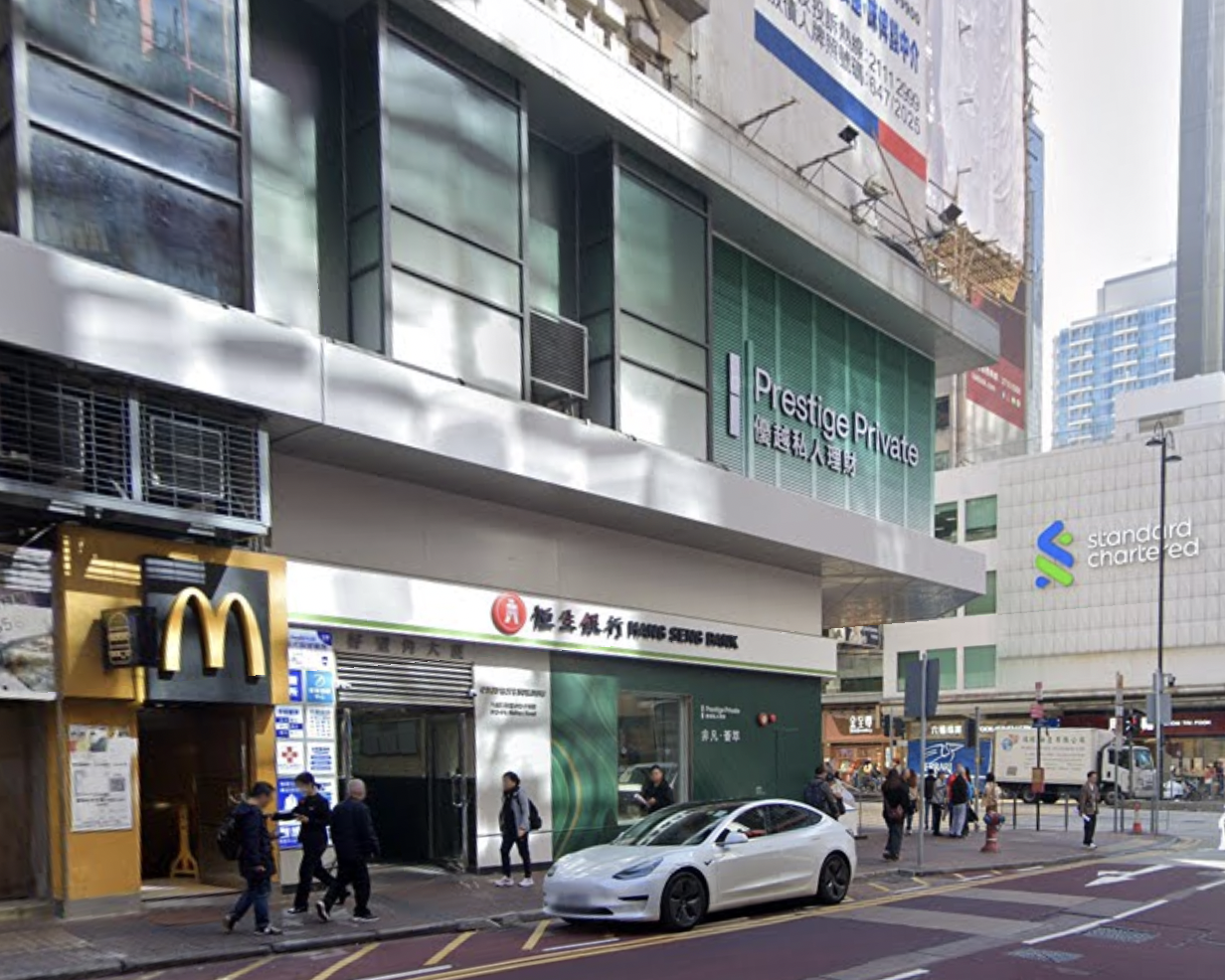
The disposal plan gained momentum in November 2025, when McDonald’s completed several sales in quick succession.
On 5 November 2025, McDonald’s sold a three-storey shop in Yuen Long Trade Centre for HK$77.4 million. The property spanned 9,695 sq ft and was bought by Acc Investment. McDonald’s had acquired the asset in 1987 for HK$9.3 million, meaning the sale price represented more than eight times its original investment.
Just days later, two more McDonald’s shops changed hands for a combined HK$183 million.
A 7,357 sq ft property in Good Hope Building, Mong Kok was sold for HK$83.2 million, or about HK$11,293 per sq ft. Meanwhile, a two-storey 6,826 sq ft shop at 12 Smithfield Road, Kennedy Town was sold for HK$100 million, or about HK$14,723 per sq ft.
Both buyers were linked through the same director, Ng Yin, according to company records cited by the South China Morning Post. The Kennedy Town shop had been purchased by McDonald’s in 1991 for HK$20 million, giving the company a fivefold gain after more than three decades of ownership.
By that point, McDonald’s had already cashed out approximately HK$260 million from the Yuen Long, Mong Kok and Kennedy Town transactions.
Quarry Bay: Another Long-Held Asset Sold
The sell-down continued in 2026.
In June, McDonald’s sold Shop 1 on the upper ground floor of Parkvale Place on King’s Road in Quarry Bay for HK$110 million. The buyer was Uni Investment Development.
McDonald’s had owned space at Parkvale Place since 1989, when it purchased several ground-floor and upper-ground-floor units for HK$150 million. The company had already begun realising value from the location in 2021, when it sold a 22,527 sq ft upper-ground-floor shop to Vivien Chan Wan-wan, founder and chairwoman of The V Group, for HK$260 million.
Together with the latest HK$110 million disposal, McDonald’s sales at Parkvale Place have brought in more than HK$370 million, exceeding the original acquisition cost.
The Quarry Bay transaction also highlighted the steady pace of disposals. The Standard reported that it marked McDonald’s latest property sale after offloading seven shops since October 2025.
Tai Po: A Major Gain After 38 Years
One of the most striking sales came in July 2026, when McDonald’s sold its Tai Po shop for HK$126 million.
The property is located on the ground floor of Fortune Plaza on On Chee Road and spans around 8,566 sq ft. The buyer was Malaysia-based developer MB World Group Berhad.
McDonald’s originally acquired the shop in 1988 for HK$19.29 million. The July 2026 disposal therefore generated a capital gain of more than HK$107 million after a 38-year holding period.
According to The Standard, the Tai Po transaction marked McDonald’s third property disposal since June 2026 and brought the total number of Hong Kong properties offloaded over the previous eight months to 11, raising around HK$980 million.
Nearly Half the Portfolio Sold
By August 2026, McDonald’s had reportedly sold 11 of its 23 self-owned Hong Kong restaurants.
Inputs Daily reported that the group had completed five sales in the first year of the disposal programme and six more in 2026, with the six 2026 transactions worth around HK$607 million. The majority of the transactions were linked to the first batch of eight properties marketed through JLL.
This means McDonald’s has already disposed of close to half of the portfolio it was reported to have put on the market.
The sell-down also provides a rare real-time view of where investor appetite remains strongest: established neighbourhoods, ground-floor or highly visible retail locations, long-standing restaurant use and stable lease structures.
A Different Kind of Retail Property Story
McDonald’s property disposals arrive during a challenging period for Hong Kong retail real estate.
The city has seen high-profile store closures, cautious consumer sentiment and reduced investor appetite for weaker retail assets. Many landlords and veteran investors have been selling properties, and the market has yet to fully recover from the reset in retail rents and valuations.
Yet McDonald’s sales show that not all retail property is treated equally. Buyers remain cautious, but they are not absent. Assets with strong locations, familiar tenants and income visibility can still attract capital.
The pattern also reflects a broader investment shift. Rather than chasing speculative upside, buyers appear to be prioritising dependable cash flow and defensive locations. In that sense, a McDonald’s-tenanted shop can look more like an income asset than a traditional discretionary retail bet.
What It Means for McDonald’s
For McDonald’s, the strategy appears to be about asset optimisation.
The company sold its 20-year master franchise rights for China and Hong Kong to a consortium led by Citic Group and Carlyle in 2017, while retaining ownership of its real estate portfolio. The current property sell-down allows McDonald’s to unlock value from long-held assets accumulated during earlier decades of expansion.
Importantly, because many of the properties are sold with long-term McDonald’s leases, the restaurants can continue operating while ownership of the underlying premises changes. That structure helps separate operating presence from real estate ownership.
In simple terms: McDonald’s can remain in the neighbourhood while monetising the bricks and mortar.
Key Reported Transactions

The Bigger Picture
McDonald’s Hong Kong property sell-down is more than a corporate asset sale. It is a snapshot of the city’s retail property market in transition.
On one hand, the market remains weak by historical standards, with valuations sharply below pre-pandemic highs and low transaction volumes. On the other hand, McDonald’s successful disposals show that investors are still prepared to act when the asset quality, tenant profile, and location are right.
For landlords, the lesson is clear: income certainty matters. For investors, the McDonald’s sales offer a benchmark for pricing resilient neighbourhood retail. And for operators, the transactions underline a growing divide between running stores and owning the real estate beneath them.
As McDonald’s continues to trim its portfolio, the next wave of sales will be watched closely. They may reveal not only how much value remains in the fast-food chain’s long-held property portfolio but also how far Hong Kong’s retail investment market has progressed in its recovery.
By F.V. | August 2026
Photos by me, Andrii Kordis, Eshak Angell.
Sources
The Standard – McDonald’s sells Tai Po shop for HK$126mln
Inside Retail Asia – McDonald’s to sell Hong Kong retail spaces valued at US$153 million
Inputs Daily – McDonald’s Sells Nearly Half Its Hong Kong Shops in Slumping Market
The Standard – McDonald’s sells its Quarry Bay shop for HK$110 mln
South China Morning Post – McDonald’s cashes in again as Hong Kong property sell-down continues
.jpeg)
.jpeg)
.webp)


